

While browsing a discussion on Reddit about manufacturing challenges, I came across some insights that inspired this cybersecurity risk management blog. One morning, a mid-sized auto parts plant experiences a complete production stoppage, bringing their entire operations to a halt.
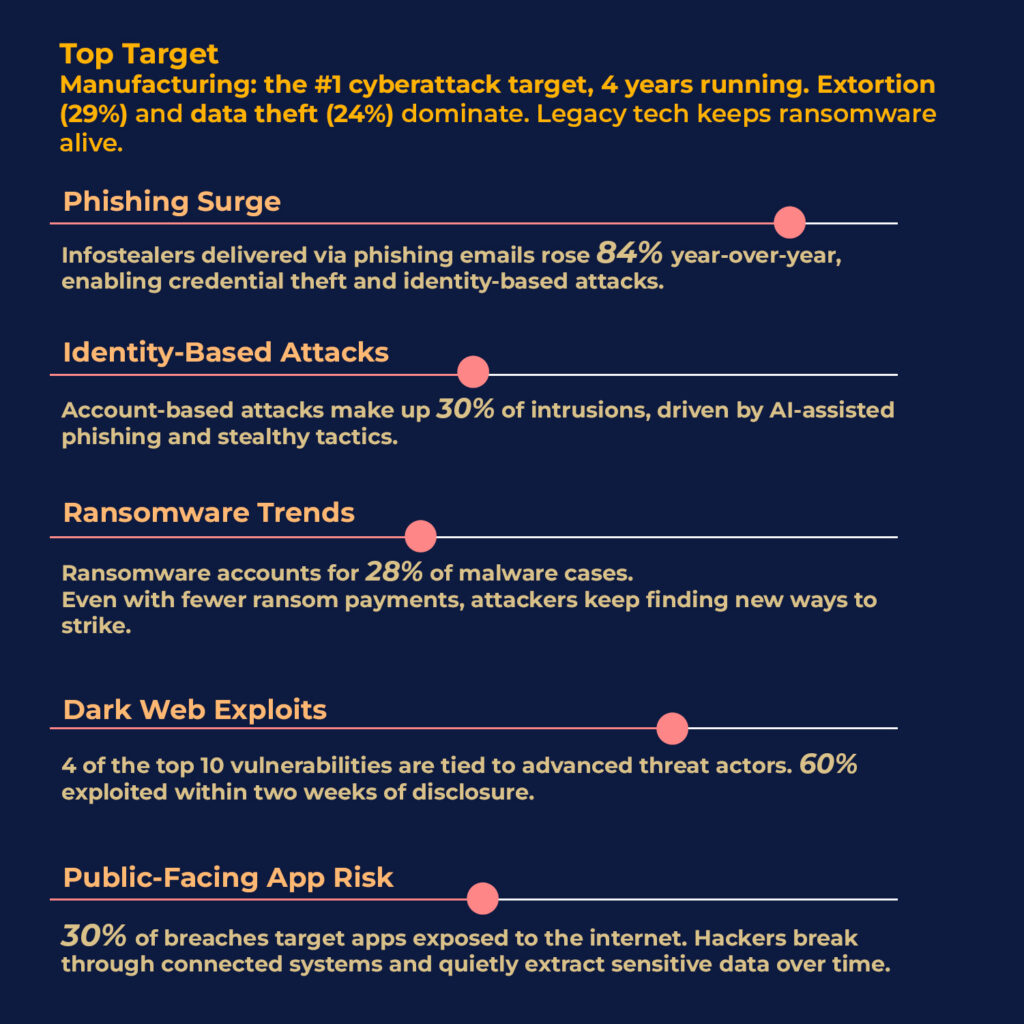
This kind of scenario is more common than you’d think. Yes, manufacturing has been the number one target for hackers for four years straight,
And often this happens because companies are still clinging onto old tech that’s long past its use by date. Ransomware is still a major threat. Phishing attack statistics 2025 points out, phishing emails are just making things worse. They are shooting up a whopping 84% year on year.
It’s a high-stakes game: get just one device wrong and it can open the flood gates for the whole system to get hacked. Now, this is the scenario and how do you think manufacturers can go through this and make the best out of it?
Keep reading to learn more about manufacturers managing these cyber risks.
Pain Points and How to Address Them
Cybersecurity threats in this manufacturing plant aren’t just technical issues; they are the reasons behind this halt in operations. They had put sensitive data at risk and disrupted the supply chain. Yes, read more to know about cybersecurity risk management.
Production Downtime
Even a short stoppage can cost a mid-sized manufacturer ten thousand in lost output, missed delivery deadlines, and potential client penalties. Time literally equals money in manufacturing, and downtime also damages customer trust and long-term relationships.
Disruptions often stem from malware targeting ICS, ransomware locking SCADA systems, or unauthorized access affecting critical machinery. Unlike IT systems, production environments can’t be rebooted instantly, as machines are interconnected and tightly timed.
How to Address this?
- Network Segmentation (IT & OT)
Separates office systems from production machinery to contain attacks. - Real-Time Monitoring
Detects anomalies like unusual traffic or unauthorized logins before they escalate. - Disaster Recovery & Offline Backups
Ensures quick restoration of operations, with backups stored offline and regularly tested.
Downtime is a Business Killer. Getting a step ahead of security risks in production systems through segmentation, monitoring, and recovery planning means matters. With them, even if an attack happens, the business can recover fast. Doing so the manufacturing plant won’t lose a fortune and client relationships stay intact.
Data & IP Exposure
Leaking designs, secret processes or customer data can all but guarantee lost contracts, trash their reputation and result in compliance fines. In manufacturing, a company’s IP is usually their most asset.
If access is not properly controlled or data gets stolen, then you’re looking at potential losses of designs, lost clients and long-term knock-on business damage. With an ever-increasing number of cyber-attacks, sensitive files are being targeted for ransom or to beat the competition.
How to Address this?
- Identity and Access Management (IAM)
Control who can access what, ensuring only authorized personnel reach critical systems. - Multi-Factor Authentication (MFA)
Adds an extra layer of security to prevent credential theft. - Encryption & Regular Vulnerability Assessments
Protect sensitive data in transit and at rest, while identifying and fixing security gaps before they are exploited.
Cybersecurity threats in the manufacturing plant must be directly impacting operations, revenue, and reputation, making prevention a critical business priority. Production downtime, data leaks, supply chain vulnerabilities, and human error are the main areas the manufacturer needs to focus on.
Supply Chain Vulnerabilities
In terms of supply chain, a compromised supplier can create hidden entry points for attackers, putting the manufacturing plant’s operations at risk even though their systems are secure. Third-party breaches could have become a major source of incidents in manufacturing.
Attackers often exploit weaker cybersecurity practices of suppliers or partners to infiltrate networks, steal data, or disrupt production without directly targeting the manufacturer.
How to Address this?
- Supplier Vetting
Assess cybersecurity practices before onboarding partners. - Contractual Security Clauses
Ensure contracts require adherence to security standards. - Monitor Third-Party Access
Continuously track and control supplier access to critical systems.
Supply chain vulnerabilities can expose manufacturers to cyberattacks even when internal systems are secure. It’s high time for the manufacturer to think about how to vet suppliers, enforce security clauses in contracts, and continuously monitor third-party access, to strengthen overall cybersecurity resilience.
Workforce Awareness
Employees of the manufacturing plant are among the top vectors for cyberattacks. They may have unintentionally made simple mistakes like clicking, phishing links or mishandling sensitive data can create entry points for attackers.
Human error can compromise even the most secure systems, making it a critical risk in manufacturing environments.
How to Address This?
- Conduct regular cyber hygiene training to build awareness.
- Simulate phishing attacks to test and reinforce employee vigilance.
- Foster a security-first culture where every employee understands their role in protecting company assets.
So, the manufacturing plant now needs a well-trained workforce as its frontline defense. Continuous education, simulated exercises, and a culture of security awareness gained on using managed security services will dramatically reduce the risk of breaches caused by human error. Wonder how?
Aftermath of Not Addressing Cybersecurity Risk Management
On analyzing the pain points and possible solutions, the biggest mistake that the manufacturing plant is making becomes clear. It is still treating cybersecurity as just another task for existing staff, assuming it can be managed alongside day-to-day operations without dedicated expertise.
While their internal teams can contribute, adding this responsibility on top of their regular duties often leads to gaps, delays, and overlooked risks.
Neglecting cybersecurity risk management or implementing half-measures can quickly escalate into serious consequences like,
Extended Downtime -> Malware or ransomware spreads across production systems, halting operations and causing severe financial losses.
Data Breaches -> Proprietary designs, customer data, or sensitive intellectual property leak, damaging client trust and weakening market competitiveness.
Supply Chain Disruptions -> Weaknesses in third-party systems propagate threats across multiple sites, magnifying the impact.
Human Error Consequences -> Even advanced systems fail if employees are untrained or unaware, leaving operations vulnerable to simple mistakes.
What could have been a manageable incident becomes in being turned into a full-blown operational and reputational crisis. This will keep costing time, money, and credibility. The key takeaway is that cybersecurity must be proactively managed with proper expertise, not treated as an add-on responsibility.
These outcomes aren’t hypothetical. They’re happening across the manufacturing world right now. The insights below reveal how attackers are exploiting every gap, from phishing to public-facing applications.
The Right Solution: Partnering with MSS Experts
A holistic, expert-driven approach can address all cybersecurity pain points simultaneously:
- Integrated Cybersecurity Strategy
Manages IT, OT, supply chain, and workforce risks cohesively, ensuring no gaps remain. - Proactive Technology Deployment
Network segmentation, identity and access management (IAM), encryption, and continuous monitoring help prevent breaches before they occur. - Workforce Empowerment
Training and awareness programs turn employees into the first line of defense. - Disaster Recovery & Incident Response Planning
Enables rapid operational restoration in the event of an incident.
Why Partnership Matters?
Collaborating with experienced cybersecurity service providers brings technical expertise, industry-specific insights, and access to proven frameworks such as NIST CSF, ISO 27001, and IEC 62443.
Any manufacturing plant’s Internal teams alone may lack the bandwidth or specialized knowledge to implement these solutions effectively. Partnering with trusted IT consulting services will ensure that cybersecurity risk management strategies are comprehensive, scalable, and truly effective.
They will provide you with long-term solutions tailored for your manufacturing plant. This means turning potential vulnerabilities into strengths. Why keep looking for short term remedies then? You are just a click away from joining hands with the best expertise.